


 Live
Live
About the place
Local context
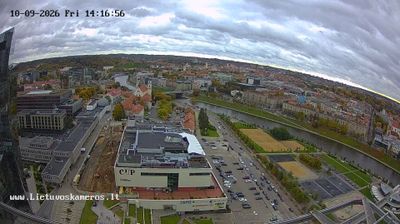
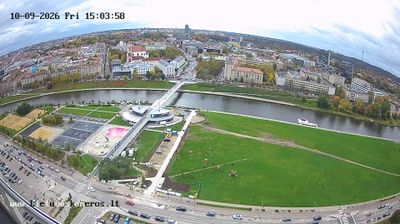
Vilnius ( VIL-nee-əs; Lithuanian: [ˈvʲɪlʲnʲʊs] ) is the capital of and largest city in Lithuania and the most-populous city in the Baltic states. The city's estimated July 2026 population was 619,405, and the Vilnius urban area (which extends beyond the city limits) has an estimated population of 767,907. Vilnius is notable for the architecture of its Old Town, considered one of Europe's largest and best-preserved old towns. The city was declared a UNESCO World Heritage Site in 1994. The architectural style known as Vilnian Baroque is named after the city, which is the easternmost Baroque city and the largest such city north of the Alps. The culture of Italy in Vilnius was significantly strengthened by the Queen of Poland, Bona Sforza, the Italian princess married in 1517 to the Polish king and grand duke Sigismund I the Old, and by their son Sigismund II Augustus. First mentioned in 1323 in a letter of the Lithuanian Grand Duke Gediminas as the capital of Lithuania, it served as the residence of the Lithuanian monarchs at the Vilnius Castle Complex, the title of which since the first Polish-Lithuanian union in 1386 also belonged to Polish monarchs. It was granted town rights in 1387 by King and Grand Duke Władysław Jagiełło. Furthermore, the city was noted for its multicultural population during the Polish–Lithuanian Commonwealth, with contemporary sources comparing it to Babylon. Before World War II and the Holocaust, Vilnius was one of Europe's most important Jewish centres, leading Napoleon to dub it "the Jerusalem of the North" when he passed through in 1812. The city
Directory source
External live page
Open the original directory destination in a new tab.
Open external pageNearby and recommended
Live webcams around the world




Featured live
Broadcaster profiles


Discover places
Global directory
Africa
Antarctica
Asia
Europe
North America
Oceania
South America