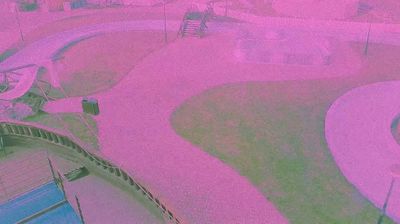
 Ao vivo
Sobre o local
Contexto local
Tbilisi ( tə-bil-EE-see, tə-BIL-iss-ee; Georgian: თბილისი, pronounced [ˈtʰbilisi] or ტფილისი, t'pilisi, [tʼpʰilisi]) is the capital and largest city of Georgia, located on the banks of the Kura River. With more than 1.3 million inhabitants, it contains almost one third of the country's population. Tbilisi was founded in the 5th century CE by Vakhtang I of Iberia and has since served as the capital of various Georgian kingdoms and republics. Between 1801 and 1917, then part of the Russian Empire, it was the seat of the Caucasus Viceroyalty, governing both the northern and southern sides of the Caucasus. Because of its location at the crossroads between Europe and Asia, and its proximity to the lucrative Silk Road, throughout history, Tbilisi has been a point of contention among various global powers. To this day, the city's location ensures its position as an important transit route for energy and trade projects. Tbilisi's history is reflected in its architecture, which is a mix of medieval, neoclassical, Beaux Arts, Art Nouveau, Stalinist, and Modern structures. Historically, Tbilisi has been home to people of diverse cultural, ethnic, and religious backgrounds, though its population is overwhelmingly Eastern Orthodox Christian. Notable tourist destinations include the Sameba and Sioni cathedrals, Freedom Square, Rustaveli Avenue and Aghmashenebeli Avenue, medieval Narikala Fortress, the pseudo-Moorish Opera Theater, and the Georgian National Museum. The climate in Tbilisi mostly ranges from 20 to 32 °C (68 to 90 °F) in summer and −1 to 7 °C (30 to 45 °F) in winter.
Fonte do diretório
Página externa ao vivo
Abra o destino original do diretório em uma nova aba.
Abrir página externaPróximos e recomendados
Webcams ao vivo pelo mundo

Ao vivo em destaque
Perfis de transmissores


Descubra lugares
Diretório global
Africa
Antarctica
Asia
Europe
North America
Oceania
South America