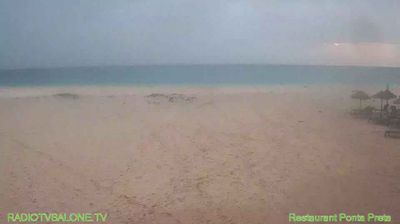
 Em direto
Sobre o local
Contexto local
Cape Verde (/ˈvɜɹd -/ , or /ˈvɜɹ.di/, VURD-ee or VURD-i; Portuguese: Cabo Verde [ˈkabu ˈveɾdɨ] ; Cape Verdean Creole: Kabu Verdi [ˈkabu ˈveɾdi]), also referred to in English by its Portuguese name Cabo Verde, and known officially as the Republic of Cabo Verde (Portuguese: República de Cabo Verde), is an archipelagic country in the central Atlantic Ocean off the coast of West Africa. It consists of ten volcanic islands with a combined land area of about 4,033 square kilometres (1,557 sq mi). These islands lie between 600 and 850 kilometres (370 and 530 miles) west of Cap-Vert, the westernmost point of continental Africa, after which they are named. Cape Verde forms part of the Macaronesia ecoregion, along with the Azores, the Canary Islands, Madeira and the Savage Isles. The archipelago was uninhabited until the 15th century, when Portuguese explorers settled the islands, establishing one of the first European settlements in the tropics. Its strategic position gave it a significant role in the transatlantic slave trade during the 16th and 17th centuries; the islands saw rapid economic growth driven by the trade of manufactured goods, rum, and cloth for African slaves, ivory, and gold. By the mid 19th century, increased foreign competition, persistent drought, and the decline of the slave trade led to economic decline and emigration; Cape Verde gradually recovered as an important commercial centre and stopping point for major shipping routes. Cape Verde became independent in 1975. Since the early 1990s, it has been a stable representative democracy and has remained one of t
Fonte do diretório
Página externa em direto
Abra o destino original do diretório num novo separador.
Abrir página externaPróximos e recomendados
Webcams em direto no mundo

Em direto em destaque
Perfis de transmissores


Descobrir locais
Diretório global
Africa
Antarctica
Asia
Europe
North America
Oceania
South America