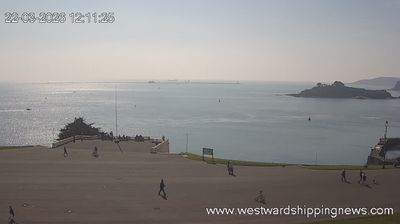
 Em direto
Sobre o local
Contexto local
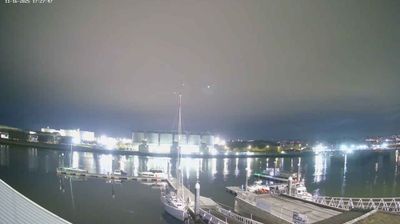
Plymouth ( PLIM-əth) is a port city and unitary authority in Devon, England. It is located on Devon's south coast between the rivers Plym and Tamar, about 36 miles (58 km) southwest of Exeter and 193 miles (311 km) southwest of London. It is the most populous city in Devon. Plymouth's history extends back to the Bronze Age, evolving from a trading post at Mount Batten into the thriving market town of Sutton, which was formally re-named as Plymouth in 1439 when it was made a borough. The settlement has played a significant role in English history, notably in 1588 when an English fleet based here defeated the Spanish Armada, and in 1620 as the departure point for the Pilgrim Fathers to the New World. During the English Civil War, the town was held by the Parliamentarians and was besieged between 1642 and 1646. In 1690 a dockyard was established on the River Tamar for the Royal Navy and Plymouth grew as a commercial shipping port throughout the Industrial Revolution. After absorbing nearby settlements in 1914, the borough was awarded city status in 1928. During World War II, Plymouth suffered extensive damage in the Plymouth Blitz, leading to post-war rebuilding that significantly shaped its modern appearance. A further expansion of its boundaries in 1967 contributed to its current status as the 30th-most populous built-up area in the UK and the second-largest city in the South West after Bristol, with a population in 2024 of 272,067. Plymouth's economy, historically rooted in shipbuilding and seafaring, has transitioned towards a service-based economy since the 1990s. It mai
Fonte do diretório
Página externa em direto
Abra o destino original do diretório num novo separador.
Abrir página externaPróximos e recomendados
Webcams em direto no mundo


Em direto em destaque
Perfis de transmissores


Descobrir locais
Diretório global
Africa
Antarctica
Asia
Europe
North America
Oceania
South America