 Live
Live
Über den Ort
Lokaler Kontext
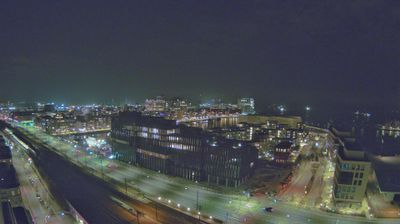
Copenhagen (Danish: København [kʰøpm̩ˈhɑwˀn] ) is the capital and most populous city of both the country of Denmark and the wider Kingdom of Denmark, with a population of 671,714 people in the municipality and 1.4 million in the urban area. The city is situated mainly on the island of Zealand (Sjælland), with a smaller part on the island of Amager. Copenhagen is separated from Malmö, Sweden, by the Øresund strait. The Øresund Bridge connects the two cities by rail and road. Settled as a Viking fishing village in the 10th century in the vicinity of what is now Gammel Strand, Copenhagen became the capital of Denmark in the early 15th century. During the 16th century, the city served as the de facto capital of the Kalmar Union and the seat of the Union's monarchy, which governed most of the modern-day Nordic region as part of a Danish confederation with Sweden and Norway. The city flourished as the cultural and economic centre of Scandinavia during the Renaissance. By the 17th century, it had become a regional centre of power, serving as the heart of the Danish government and military. During the 18th century, Copenhagen suffered a devastating plague outbreak and urban conflagrations. Major redevelopment included the construction of the prestigious district of Frederiksstaden and the establishment of cultural institutions such as the Royal Theatre and the Royal Academy of Fine Arts. The city became the centre of the Danish slave trade during this period. In 1807, the city was bombarded by a British fleet during the Napoleonic Wars, before the Danish Golden Age brought a Neocla
Verzeichnisquelle
Externe Live-Seite
Öffne das ursprüngliche Verzeichnisziel in einem neuen Tab.
Externe Seite öffnenIn der Nähe und empfohlen
Live-Webcams weltweit
Live vorgestellt
Broadcaster-Profile


Orte entdecken
Globales Verzeichnis
Africa
Antarctica
Asia
Europe
North America
Oceania
South America