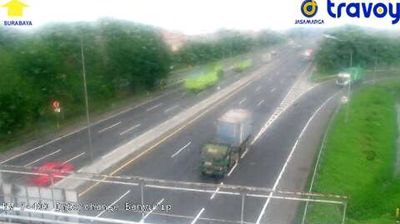
 En directo
Sobre el lugar
Contexto local
Jakarta, officially the Special Capital Region of Jakarta, is the de facto capital and largest city of Indonesia, with administrative status equivalent to a province. It lies on the northwestern coast of Java, borders the provinces of West Java and Banten, and faces the Java Sea to the north. Jakarta itself covers about 662 square kilometres (256 square miles), but the wider Jakarta metropolitan area—locally known as Jabodetabek—is among the largest urban agglomerations in the world by area. By population, Greater Jakarta is the most populous urban area in the world with a population of over 40 million. Jakarta is Indonesia's political, economic, and cultural centre and contains many national institutions, corporate headquarters, and the secretariat of the Association of Southeast Asian Nations (ASEAN). The area that is now Jakarta has been inhabited since at least the early centuries of the Common Era and was long associated with Sunda Kelapa, the port of the Sunda Kingdom. In 1527, the settlement was renamed Jayakarta after being captured by forces of the Demak Sultanate. The Dutch East India Company (VOC) seized the city in 1619 and rebuilt it as Batavia, which served as the centre of VOC power and subsequently of Dutch colonial rule in the Indonesian archipelago for more than three centuries. After the Japanese occupation during the Second World War and Indonesia's declaration of independence in 1945, the city took the name Jakarta and became the capital of the new republic. Classified as an alpha world city, Jakarta is Indonesia's main financial and commercial centre a
Fuente del directorio
Página externa en vivo
Abre el destino original del directorio en una nueva pestaña.
Abrir página externaCercanos y recomendados
Webcams en directo del mundo
En vivo destacado
Perfiles de creadores


Descubrir lugares
Directorio global
Africa
Antarctica
Asia
Europe
North America
Oceania
South America