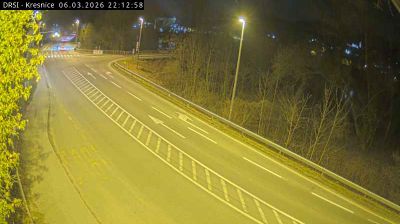
 Live
Live
Informazioni sul luogo
Contesto locale
Slovenia, officially the Republic of Slovenia, is a country in Central Europe. It borders Italy to the west, Austria to the north, Hungary to the northeast, and Croatia to the south and southeast; its southwestern boundary consists of a 46.6-kilometre (29.0 mi) coastline on the Adriatic Sea. The country is mostly mountainous and forested, covering 20,271 square kilometres (7,827 sq mi), with a population of approximately 2.1 million people. Slovene is the official language. Slovenia has a predominantly temperate continental climate, with the exception of the Slovene Littoral and the Julian Alps. Ljubljana, the capital and largest city, is geographically situated near the centre of the country. Other larger urban centers include Maribor, Ptuj, Kranj, Celje, Koper, Novo mesto, Velenje, Nova Gorica, Sežana, Murska Sobota and Jesenice. The region has a long history of settlement. The Proto-Illyrian tribes settled the area during the Early Bronze Age, stretching from present-day Albania to the city of Trieste, while the Slavic tribes (the ancestors of the modern Slovenes) arrived in the 5th century AD. The present day territory has been part of many different states, including the Roman Empire, the Western Roman Empire, the Carolingian Empire, the Holy Roman Empire, the Kingdom of Hungary, the Republic of Venice, the Habsburg Empire, Napoleonic France, the Austrian Empire and the Austro-Hungarian Empire. The Kingdom of Serbs, Croats, and Slovenes was formed in December 1918; in 1929, the Kingdom became known as Yugoslavia. In 1941, during World War II, Slovenia's territory was
Fonte della directory
Pagina live esterna
Apri la destinazione originale della directory in una nuova scheda.
Apri pagina esternaNelle vicinanze e consigliati
Webcam live nel mondo
Live in evidenza
Profili broadcaster


Scopri luoghi
Directory globale
Africa
Antarctica
Asia
Europe
North America
Oceania
South America