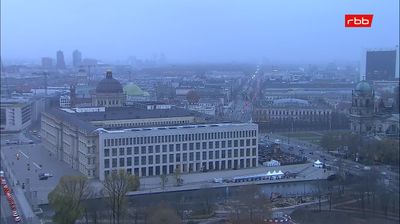
 En direct
À propos du lieu
Contexte local
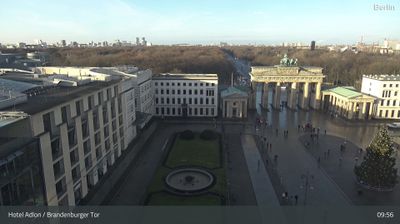
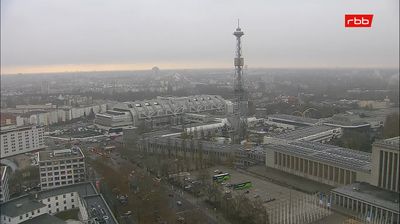
Berlin is the capital of Germany as well as its largest city by both area and population. With 3.7 million inhabitants, it has the highest population within its city limits of any city in the European Union. The city is also one of the states of Germany, being the third-smallest state in the country by area. Berlin is surrounded by the state of Brandenburg, bordering Brandenburg's capital Potsdam to the southwest. The urban area of Berlin has a population of over 5 million, making it the most populous in Germany. The Berlin-Brandenburg capital region has around 6 million inhabitants and is Germany's second-largest metropolitan region after the Rhine-Ruhr region, as well as the fifth-biggest metropolitan region by GDP in the European Union. Berlin was built along the banks of the Spree river, which flows into the Havel in the western borough of Spandau. The city includes lakes in the western and southeastern boroughs, the largest of which is Müggelsee. About 1/3 of the city's area is composed of forests, parks and gardens, rivers, canals, and lakes. First documented in the 13th century and at the crossing of two important historic trade routes, Berlin was designated the capital of the Margraviate of Brandenburg (1417–1701), Kingdom of Prussia (1701–1918), German Empire (1871–1918), Weimar Republic (1919–1933), and Nazi Germany (1933–1945). Berlin served as a scientific, artistic, and philosophical hub during the Age of Enlightenment, Neoclassicism, and the German revolutions of 1848–1849. During the Gründerzeit, an industrialization-induced economic boom triggered a rapid po
Source de l’annuaire
Page externe en direct
Ouvrez la destination d’origine dans un nouvel onglet.
Ouvrir la page externeÀ proximité et recommandés
Webcams en direct du monde





En direct à la une
Profils de diffuseurs


Découvrir des lieux
Annuaire mondial
Africa
Antarctica
Asia
Europe
North America
Oceania
South America