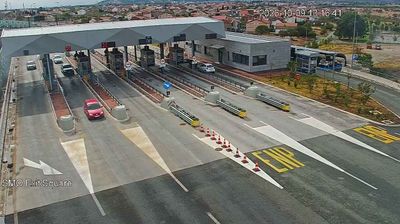
 En direct
À propos du lieu
Contexte local
Montenegro is a country in Southeast Europe, on the Balkan Peninsula. Its 25 municipalities have a total population of 633,158 people in an area of 13,883 km2 (5,360 sq mi). It is bordered by Serbia to the northeast, Bosnia and Herzegovina to the northwest, Kosovo to the east, Albania to the southeast, and Croatia to the west, and has a coastline along the Adriatic Sea to the southwest. The capital and largest city is Podgorica, while Cetinje is the Old Royal Capital and cultural centre. Before the arrival of the Slav peoples in the Balkans in the 6th and 7th centuries CE, the area now known as Montenegro was inhabited principally by people known as Illyrians. During the Early Medieval period, three principalities were located on the territory of modern-day Montenegro: Duklja, roughly corresponding to the southern half; Travunia, the west; and Rascia proper, the north. The Principality of Zeta emerged in the 14th and 15th centuries. From the late 14th century to the late 18th century, large parts of southern Montenegro were ruled by the Venetian Republic and incorporated into Venetian Albania. The name Montenegro was first used to refer to the country in the late 15th century. After falling under Ottoman Empire rule, Montenegro gained semi-autonomy in 1696 under the rule of the House of Petrović-Njegoš, first as a theocracy and later as a secular principality. Montenegro's independence was recognised by the Great Powers at the Congress of Berlin in 1878. In 1910, the country became a kingdom. After World War I, the kingdom became part of Yugoslavia. Following the breakup of
Source de l’annuaire
Page externe en direct
Ouvrez la destination d’origine dans un nouvel onglet.
Ouvrir la page externeÀ proximité et recommandés
Webcams en direct du monde
En direct à la une
Profils de diffuseurs


Découvrir des lieux
Annuaire mondial
Africa
Antarctica
Asia
Europe
North America
Oceania
South America